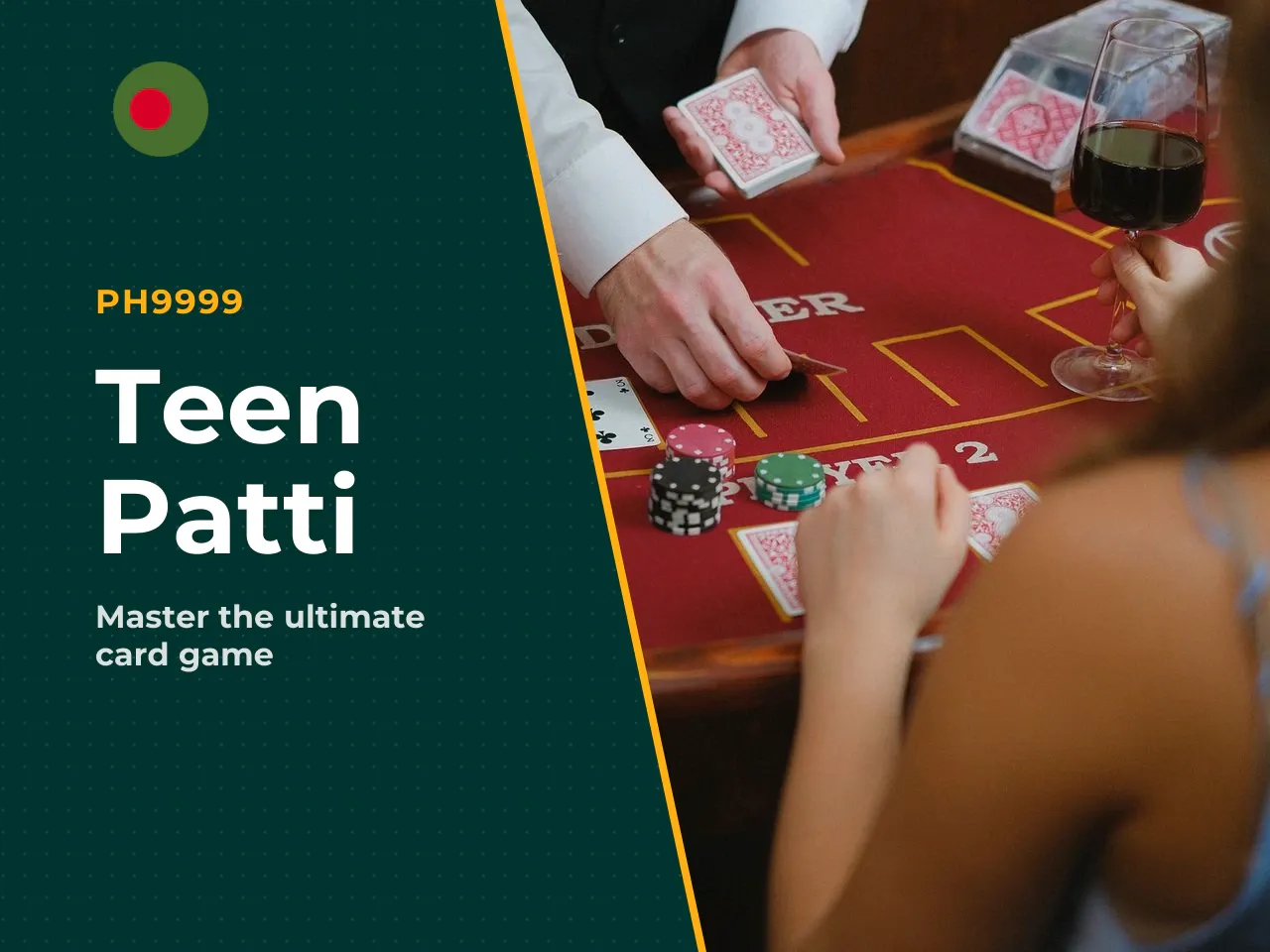
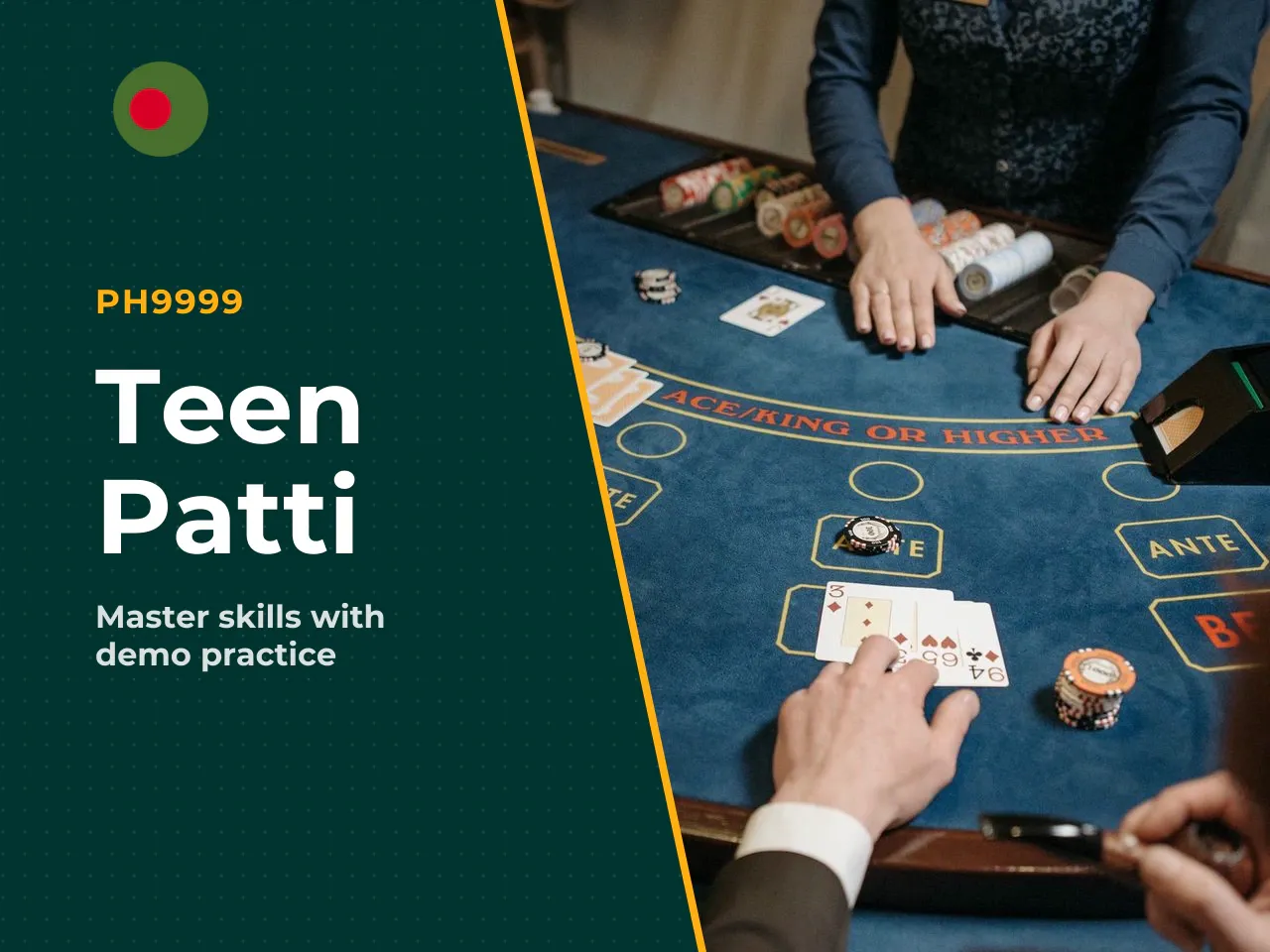
The Deck and the Deal. Teen patti uses a standard 52-card deck with no jokers. Cards rank from Ace (high) down to 2 (low). One player serves as the dealer, and the position rotates clockwise after each hand. Before any cards are dealt, every player contributes a mandatory minimum bet called the Boot (also known as the Ante). This forced contribution creates the starting pot.
The dealer shuffles and deals three cards face-down to each player, one card at a time, moving clockwise starting with the player to the dealer's left.
The Blind/Seen Decision. Starting with the player to the dealer's left, each player chooses to play Blind (betting without looking at their cards) or Seen (betting after viewing their cards). A Blind player may look at their cards at any later turn, at which point they become a Seen player for the rest of the hand. You cannot go back to Blind once you have looked.
Betting Rounds (Chaal). Betting moves clockwise. At each turn, a player can Bet/Call, Raise, or Fold:
- A Blind player must bet at least the current stake and no more than twice the current stake. The current stake for the next player equals the amount the Blind player wagered.
- A Seen player must bet at least twice the current stake and no more than four times the current stake. The current stake for the next player becomes half of what the Seen player wagered.
This asymmetry is a defining feature of teen patti. Seen players always pay double the minimum compared to Blind players, which incentivizes staying blind and rewards courage. Or, well, at least the appearance of courage.
Sideshow (Compromise). Once at least two Seen players remain, a Seen player may request a Sideshow with the player who bet immediately before them. If accepted, both players compare cards privately and the weaker hand must fold. If refused, the round continues. If hands are equal at Sideshow, the player who requested it must fold. Blind players cannot request or be forced into a Sideshow.
Showdown (Show). When only two players remain, either may request a Show:
- Blind player requesting Show: pays the current stake into the pot regardless of the opponent's status.
- Seen player vs Blind player: the Seen player cannot demand a Show. They must continue betting or fold.
- Both players Seen: either may pay twice the current stake to force a Show.
At the Show, both hands are revealed. The higher-ranking hand wins the pot. In the event of a tie, the player who paid for the Show loses. This rule penalizes the initiator and rewards patience.
Quick Example. Four players, A through D, each place a 1-unit Boot. D deals.
- Player A plays Blind, bets 1 unit. Current stake: 1.
- Player B looks at cards (Seen), does not like them, folds.
- Player C plays Blind, bets 1 unit. Current stake: 1.
- Player D looks at cards (Seen), must bet at least 2 units. Bets 2. Current stake for next player: 1.
- Player A raises to 2 units (still Blind). Current stake: 2.
- Player C decides to look, does not like the hand, folds.
- Player D (Seen) must bet at least 4 units. Bets 4. Current stake for next player: 2.
- Player A looks at cards, becoming Seen. Bets 4 units and requests a Show.
- Both reveal cards. Higher-ranking hand wins the entire pot.