Table of Content

Poker Online: Rules, Strategy, Demo and Real Money Play

"As the chief editor of iGaming Bangladesh, I analyse tonnes of data every day. Our editorial position is unequivocal: online platforms should never be treated as an income source. Poker demands analytics, discipline and a strict grasp of the rules. Studying the mechanics and limitations protects a player far more reliably than faith in luck." - Nadia Farzana Haque, iGaming Bangladesh

Last updated: July 2026

RTP

97.3%

Volatility

Medium

Min bet

NGN 200

Poker Online Rules, Strategy, Demo and

What Poker Is and How Online Poker Works

Poker is a card game where the outcome depends on strict mathematical rules, a random number generator (RNG) and the strategic decisions players make over many sessions. The online poker format moves traditional table dynamics into a digital environment. Software manages deals and connects large player pools from different regions. Compared to a physical game, the pace online is significantly faster, and the human factor (reading facial expressions, body language) gives way to statistical analysis and timing tells.

"An analysis of 4.45 million decisions showed that players prefer asymmetrically high payoffs - they take insurance 40% less often when risk has a right-skewed profile." - CESifo Working Paper Skewness Preferences: Evidence from Online Poker (2023). https://www.cesifo.org/en/publications/2023/working-paper/skewness-preferences-evidence-online-poker

What does this mean in practice? Understanding how an online poker game works requires accepting that the game is built on controlled risk. Software acts as a neutral arbiter. Each table remotely unites those who want to play poker, forming a global player pool with transparent logging of every action in a database.

"Players exhibiting a 'house money effect' earn less and play less often; those who chase losses sacrifice roughly 50% of their potential profit." - Helsinki GSE Discussion Paper 10, House Money Effect and Loss Chasing in Online Poker (2023). https://www.helsinkigse.fi/paper/house-money-effect-and-loss-chasing-in-online-poker/

"In a European dataset of 2,497 players the average age was 29.6, 75% were under 35, and the mean deposit was €1,144 with a maximum of €112,337." - European Online Poker Dataset Analysis (2023). https://github.com/nicolo-ribaudo/online-poker-dataset

How Poker Online Differs from Casino Poker and Home Games

Poker rooms represent a zero-sum game among live participants. Casino poker, on the other hand, is a mathematically calibrated game against the house with a fixed house edge. On poker sites, the platform does not take part in hands. It simply collects a commission (rake) from the pot.

In casino variants (Casino Hold'em, Three Card Poker, Caribbean Stud), the player competes against a dealer according to a rigid payout table. Home games rely on social agreements and trust. Digital tables on the network apply rules strictly through algorithms, preventing technical errors in pot distribution or hand-strength evaluation.

How Poker Online Differs from Casino

"Online players spend more, expect higher profits, and demonstrate more gambling problems than casino poker participants." - Quebec Chief Scientist Report, Online and Casino Gamblers: Are They All the Same?. https://www.inspq.qc.ca/publications/2785

Main Ways to Play: Demo, Live and Real Money

The industry offers three basic scenarios. First, free poker demo for learning the interface. Second, stream formats (poker live dealer and poker live casino) for atmosphere immersion. Third, full poker real money for competitive play with financial risk.

Demo mode is ideal for newcomers because it eliminates the cost of mistakes entirely. Live tables attract users who want visual control of a real deck. Real money play suits only those who have mastered bankroll management and are genuinely prepared for financial losses.

To compare online casino and gaming formats, consult the table below.

Comparison of poker demo, poker live dealer, poker live casino and poker real money

Main Ways to Play Demo, Live
FormatPlayer GoalFinancial RiskPreparation LevelAvailability
Poker demoLearn rules and interface.None.Minimal.Widely available without verification.
Poker live dealerPresence effect, socialisation.Real money.Medium (understanding live deal tempo).Requires deposit and verification.
Poker live casinoPlay by fixed casino rules.Real money against house edge.Basic (knowing hand rankings).Widely available in live-casino segment.
Poker real moneyCompetitive play with variance.From micro-stakes to open risk.High (strategy, discipline).Requires account and strict compliance.

Takeaway: Format choice depends strictly on experience. Demo eliminates financial losses and suits newcomers. Live variations give immersion, while real money demands proven stress resilience and solid fundamentals.

Poker Rules Every Beginner Should Know

Basic poker rules rest on the hierarchy of card combinations (hand strength) and the strict sequence of actions in betting rounds, during which a common pot is formed. Understanding how cards work and how players make decisions about their hand at each stage is foundational. Without thorough knowledge of which hand beats which, any participation in the game becomes random guessing. That is not poker. That is a coin flip with extra steps.

Hand Rankings, Cards and Winning Combinations

Winning combinations (hand rankings) obey strict mathematical probability from a 52-card deck. Before your first session, memorise the complete hierarchy, from the weakest (High Card) to the strongest (Royal Flush). No shortcuts here.

Complete hand rankings from strongest to weakest:

RankHandExampleApproximate Probability (5-card deal)
1Royal FlushA♠ K♠ Q♠ J♠ 10♠0.000154%
2Straight Flush9♥ 8♥ 7♥ 6♥ 5♥0.00139%
3Four of a KindQ♣ Q♦ Q♥ Q♠ 7♦0.0240%
4Full HouseK♣ K♦ K♠ 4♥ 4♣0.1441%
5FlushA♦ J♦ 8♦ 6♦ 3♦0.1965%
6Straight10♠ 9♣ 8♦ 7♥ 6♠0.3925%
7Three of a Kind5♣ 5♦ 5♠ K♥ 9♣2.1128%
8Two PairJ♥ J♣ 4♠ 4♦ A♣4.7539%
9One Pair10♥ 10♦ A♠ 8♣ 3♦42.2569%
10High CardA♠ J♦ 9♣ 6♥ 2♣50.1177%

"An analysis of 27 million online hands showed that at small stakes, low pocket pairs more often yield profit than middle pairs, thanks to hitting sets in multi-way pots." - Cornell University study on online poker hands (Siler, 2010). https://arxiv.org/abs/0907.3740

This proves that hand strength depends not only on the ranking table but also on the context at the table. A pair of fives can outperform a pair of nines if the board cooperates.

Betting Rounds, Pot and Player Actions

The pot is built through bets: players in turn may check (pass), bet, call, raise or fold. All chips sent to the centre move into the pot and are not returnable. Clockwise action order is a critical element. Decisions made later (playing in position) carry greater informational value because you have already seen what your opponents chose to do.

A standard Texas Hold'em hand walks through four rounds:

  1. Pre-flop - two hole cards are dealt; action starts left of the big blind.
  2. Flop - three community cards appear; a new betting round follows.
  3. Turn - one more community card is dealt; another betting round.
  4. River - the final community card; the last betting round and then showdown.

At every stage, chips that enter the pot stay there. The final pot goes to the best hand at showdown, or to the last remaining player if everyone else folds. Simple in theory. Endlessly complex in execution.

Betting Rounds, Pot and Player Actions

"The PHH format records every action, bet and game parameter in a machine-readable structure - it is the standard for 11 poker variants." - ArXiv preprint PHH: Poker Hand History File Format (2023). https://arxiv.org/abs/2312.11753

Which Poker Game Format Fits Your Goals

Choosing between cash games and tournament formats determines the level of financial pressure, table dynamics and time requirements. Different poker games shape different survival strategies. For beginners, it is critical to test formats with limited risk before moving to open-entry tables where an advanced player can quickly bust a newcomer's stack.

Explore more about gaming formats at online casinos to compare your options.

Cash Games, Tournaments and Beginner-Friendly Choices

In cash games every chip has a direct monetary equivalent. In tournaments you buy a starting stack that has no direct denomination until you reach the prize zone. The difference is not just structural. It changes how you think about every single decision.

"Cash-game players spend 2 to 5 times more than tournament participants, due to the ability to constantly re-buy and the absence of a loss ceiling." - Quebec Chief Scientist Report, Online and Casino Gamblers: Are They All the Same?. https://www.inspq.qc.ca/publications/2785

Beginners should therefore start in low buy-in tournaments. They cap the maximum loss strictly at the entry price and teach short-stack play without the possibility of unlimited session losses.

Texas Hold'em and Other Common Variants

Texas Hold'em is the gold standard of poker, ideal for starting thanks to transparent mechanics and a huge body of training materials. If you are new, this is where you begin. Period.

"The PHH dataset (2023) covers 10,088 hands from 11 poker variants, including all 83 televised WSOP 2023 hands and AI-agent Pluribus games." - ArXiv preprint PHH: Poker Hand History File Format (2023). https://arxiv.org/abs/2312.11753

Games like Omaha carry significantly amplified variance, so newcomers should choose a familiar discipline before branching out. Master one format first. Then experiment.

Cash Games (Pros and Cons)

  • Pros: Fast learning speed, unlimited session time (leave any time), deep stacks for practising complex decisions.
  • Cons: High bankroll pressure, unlimited loss risk during tilt.

Tournaments (Pros and Cons)

  • Pros: Strictly limited financial risk (ticket price only), teaches survival play and patience.
  • Cons: High time commitment, strong variance due to payout structure.

Demo Play (Pros and Cons)

  • Pros: No financial risk, comfortable environment for learning buttons and rules.
  • Cons: No realistic action psychology, zero benefit for learning bluffing and bankroll management.

While designing the information architecture on our portal, we faced the challenge of helping newcomers choose formats. We structured the starter-format guide, focusing Bangladesh traffic on micro-stakes tournaments. As a result, audience engagement with learning mechanics grew, and the percentage of complaints about quick losses decreased. Read more about our approach to format classification on the iGaming overview page.

Games like Omaha carry significantly amplified

Poker Demo: When Free Play Is Useful and Where It Falls Short

Poker demo mode functions as a safe sandbox for learning mechanics (rules and interface), but it is categorically unable to reproduce the psychological dynamics of real tables. Free practice is useful for getting comfortable with an online poker client. Yet the absence of money pressure leads to distorted mathematical behaviour. When chips cost nothing, decisions lose value, and beginners may develop harmful habits without even realising it.

What Demo Mode Teaches Well

Training tables let you perfectly master navigation, board reading (hand recognition) and game tempo. Users learn the speed of the time-bank, follow chip movement (table flow) and get accustomed to action logic within the interface. Primary motor and visual skills form without any threat to your wallet.

Four core skills best developed in demo mode:

  1. Hand recognition - practise identifying combinations without the cost of bank errors.
  2. Reading table actions - distinguish between check, bet, raise, fold and action order on the real interface.
  3. Client navigation - locate bet buttons, timers, table menus and lobby elements.
  4. Time-bank conditioning - play under a per-move clock and track your decision-making tempo.
What Demo Mode Teaches Well. Training

Why Demo Cannot Fully Replace Real Money Poker

Demo mode eliminates stress and the fear of loss, which completely destroys the concept of pressure on opponents. It feels like poker. It looks like poker. But it is not quite poker.

"Players who chase losses earn more and play more frequently, but loss-chasing cuts their profit by roughly 50% compared to unbiased players." - Helsinki GSE Discussion Paper 10 (2023). https://www.helsinkigse.fi/paper/house-money-effect-and-loss-chasing-in-online-poker/

In the demo version, the value of chips and money decisions is absent, so opponent behaviour models are radically distorted compared to real games. Even a small real stake fundamentally changes the process: participants begin reacting to prior winnings (the house-money effect) and try to recover losses (chasing). These psychological forces simply do not exist when the chips are free.

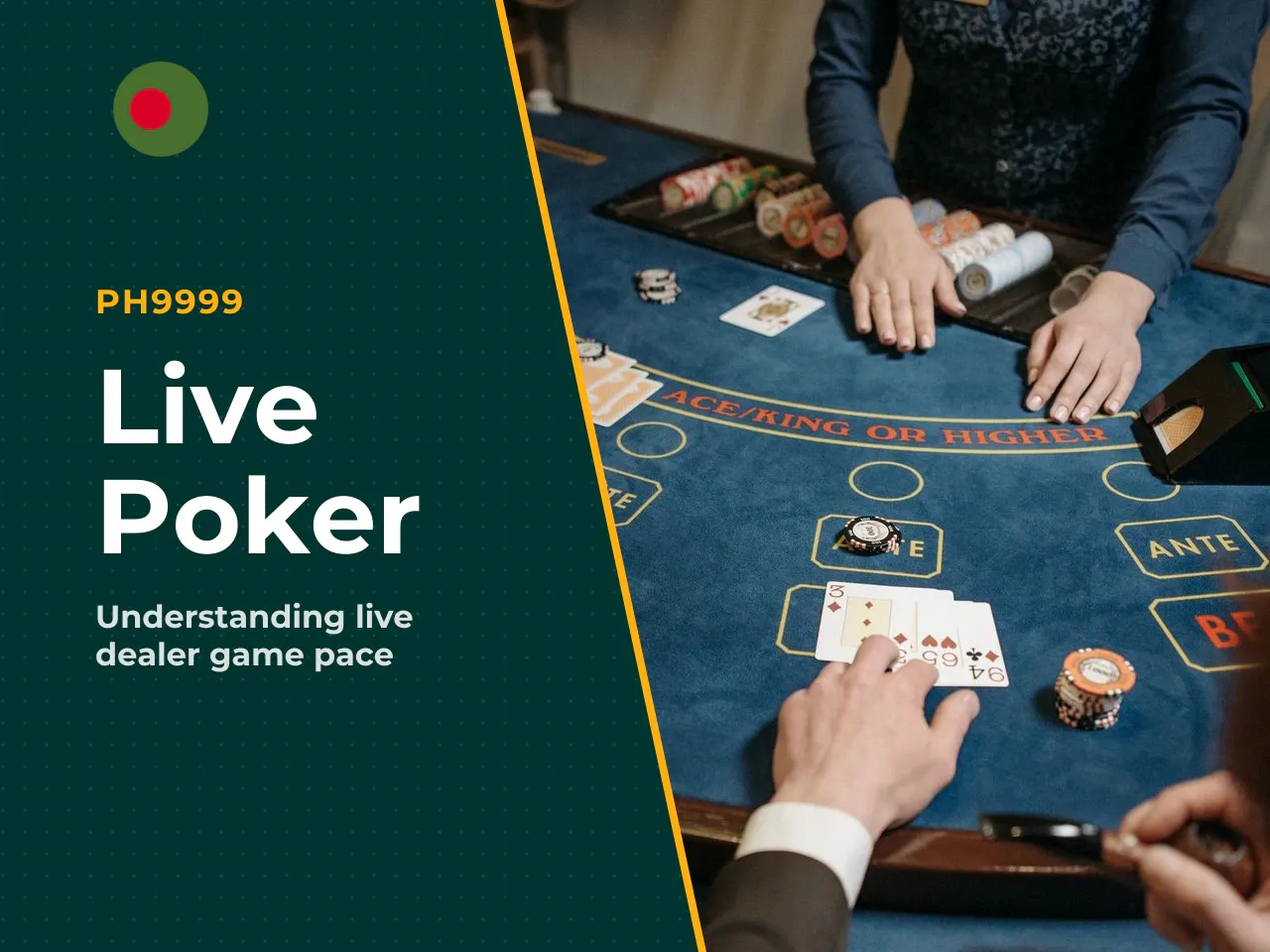
Live Dealer Poker and Live Casino Poker Explained

Poker live dealer games combine a video stream from a real studio with a digital betting interface, allowing you to watch a physical deck through your device screen. Unlike standard RNG-based online poker, these games use RFID-tagged decks: the dealer draws a card, a sensor reads it within milliseconds, and it appears on the client. This technology delivers a social feel and trust signals, though it changes the tempo and typically shifts the format from player-vs-player competition into a casino model.

Benefits of Live Dealer Tables

The main advantage is total immersion and process transparency. You see the dealer's hands, the shuffling process and the physical movement of cards. This creates a classic venue atmosphere, eliminating distrust in algorithms. For some participants, live interaction and chat communication compensate for the isolation of standard online play. There is something reassuring about watching a real person deal real cards, even through a screen.

Limitations of Live Poker Online

The primary drawback is a significant reduction in pace. While digital tables can deal an estimated 60 to 100+ hands per hour, a live physical dealer slows the process considerably, often to around 25 to 35 hands per hour depending on the variant. Moreover, game selection is narrower: most often these are formats against the house (for example, Casino Hold'em), the mathematics of which inherently contain a negative expectation (house edge) compared to classic poker rooms.

Worth noting: fewer tables running at any given time means less flexibility in choosing your stakes and format. If you prefer player-vs-player competition, standard online poker rooms typically offer a much wider selection.

Limitations of Live Poker Online. The

Real Money Poker: What Changes When Money Is on the Line

Disclaimer: The information below is general in nature and does not replace professional advice. Participation in real money poker involves a significant risk of financial loss. Check the legality of online poker in your jurisdiction before playing.

When you move into poker real money, every button press acquires mathematical and psychological weight. The variance factor begins affecting your emotional state in ways demo mode never could. Stakes require bankroll management, and tough games punish weak decisions. Emotional discipline and the right choice of platform offering the best value become just as important as knowing the rules.

Micro, Low and Higher Stakes: What Beginners Should Expect

At micro-stakes, opponents make many basic mistakes, but even here the long run demands caution. Do not confuse "low stakes" with "low consequences."

"The top 1% of players by spending differ significantly from the rest in session count and average deposit (p < 0.05), but not in final losses." - European Online Poker Dataset Analysis (2023). https://github.com/nicolo-ribaudo/online-poker-dataset

Beginners should start at the very lowest stakes, understanding that the speed of deals and natural variance will test their nerves. A common starting point: $0.01/$0.02 blinds for cash games, or tournaments with buy-ins between $1 and $5. These levels let you experience real money dynamics without catastrophic financial exposure.

Bonuses, Offers and Rewards at Poker Sites

Deposit bonuses and rakeback mathematically reduce negative expectation by returning part of the commission. But they also act as powerful psychological triggers. This is where things get tricky.

"Bonuses and incentives increase total bet amounts by approximately 11%, triple the probability of 'bad' decisions, and halve the share of those who decline to bet." - Euro 2024 Experiment on Gambling Inducements and Decision Errors (2024). https://doi.org/10.1016/j.addbeh.2024.107916

"Every €1 invested in bonuses yields €1.6 in deposits; €1 in sponsorship returns €4 in deposits. Advertising and promotions significantly increase the number of active accounts (p < 0.025)." - SARIMA Analysis of the Spanish Online Gambling Market, Public Health (2024). https://doi.org/10.1016/j.puhe.2024.03.012

Therefore, bonuses should be perceived as insurance, not as a reason to raise your activity limits. If a bonus makes you play more hands or deposit more than planned, it is working against you.

Responsible Gaming Notice from iGaming Bangladesh: Any participation in real money poker carries a significant risk of losing funds. Platform availability, legality and age requirements (typically 18+ or 21+) depend strictly on local jurisdiction. The information in this review is purely educational, contains no calls to gamble, and does not replace studying responsible gaming (RG) principles. Do not play with money you are afraid to lose.

Therefore, bonuses should be perceived as

Poker Strategy Basics That Improve Your Game Fast

The best poker strategy for newcomers is built on a tight-aggressive style (TAG), which minimises marginal losing situations. Success rests not on cunning bluffs but on strict starting hand selection, position awareness at the table and the ability to control pot size. Timely folding (fold discipline) is, frankly, the most underrated survival skill in the game.

Learn more about strategies and online gaming formats that you can put into practice right away.

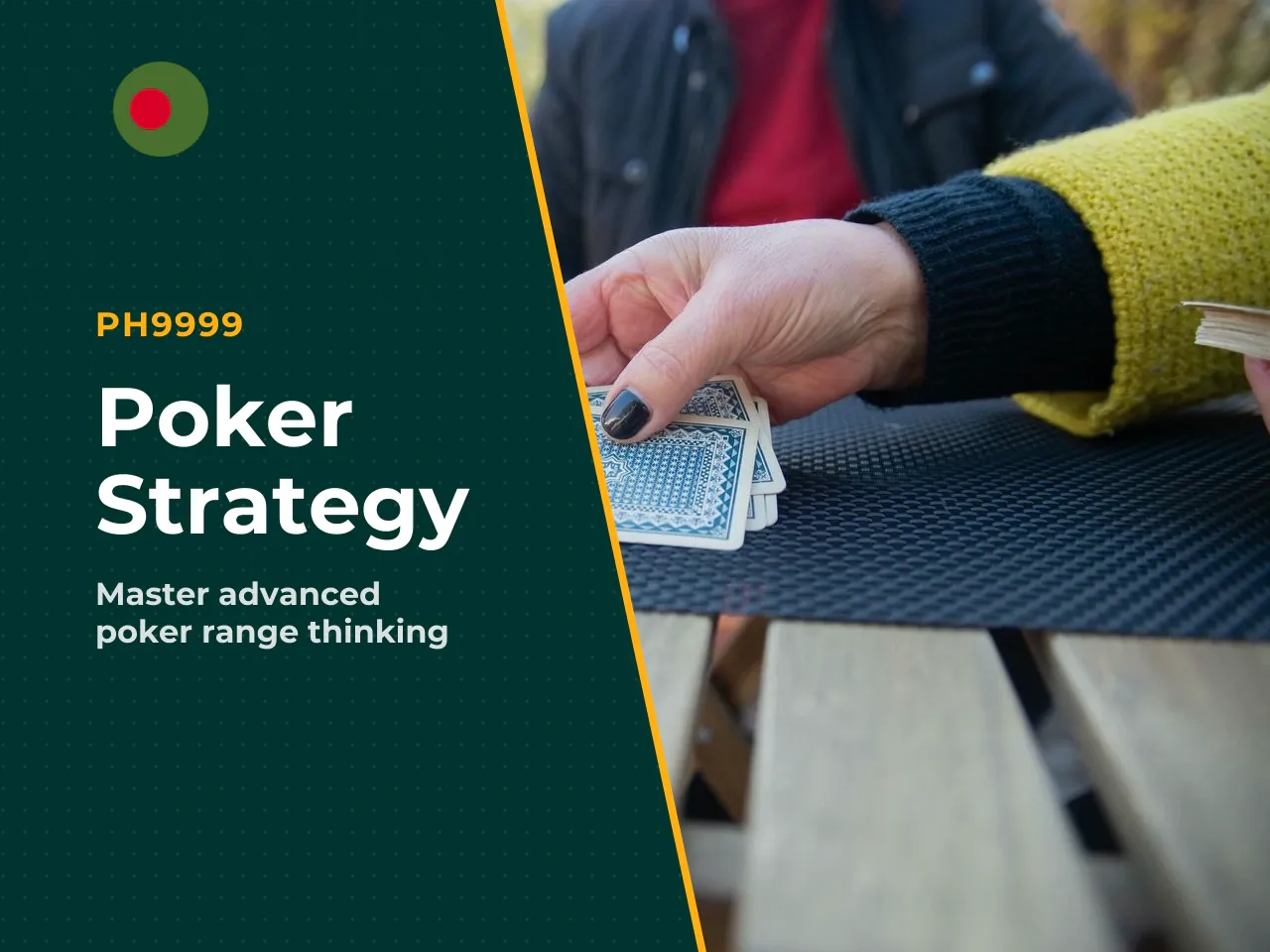
Think About Ranges, Not Hands

One of the easiest ways to spot average or beginner players is to observe how they think about their opponent's holding. Beginners try to put an opponent on an exact hand, for example A♥J♥, because "that is what their gut tells them." Advanced players think in terms of ranges: the entire spectrum of hands an opponent could hold in a given situation.

A range might include a flush, top pair, middle pair, a draw, ace-high or a complete bluff. Good players estimate the frequency of each part of that range and then make the most profitable decision. Basing your play on gut feeling alone is a recipe for inconsistency.

Tip: Before each decision, ask yourself: "What is my opponent's range here?" Not "What exact hand do they have?"

Think About Ranges, Not Hands. One

Play Fewer Hands and Make Clearer Decisions

Narrowing your starting hand range radically cuts the number of difficult decisions. Newcomers lose bankrolls precisely because they participate in hands with weak potential. It feels boring to fold. But boring wins money.

"Players who win many small pots ultimately lose more money than those who win less frequently but in larger pots - strategic situation selection matters more than frequency." - Cornell University study on 27 million online poker hands (Siler, 2010). https://arxiv.org/abs/0907.3740

Playing only a strong spectrum eliminates traps and improves consistency. Folding 70 to 80% of your starting hands is the norm for a sensible start. Yes, really. That much.

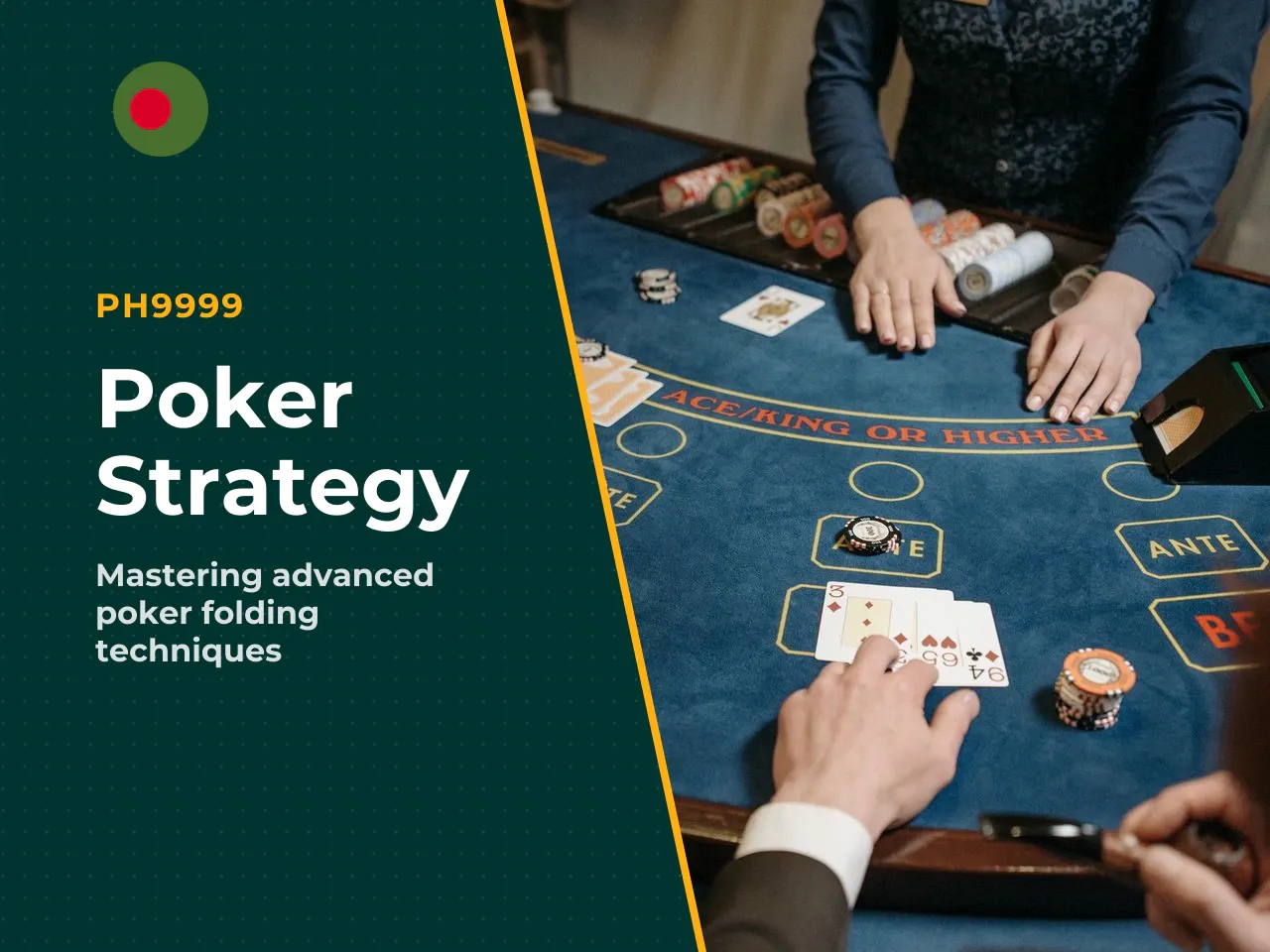
Know When to Fold Your Aces

A clear difference between average and great poker players is the ability to fold an overpair. That sick feeling when you hold A♠A♦ and a tight opponent shoves all-in on the turn? Average players make a "crying call" and see the set once again. Strong players can let go of emotional attachment to premium hands.

At lower stakes, certain patterns are easily recognisable. When a passive player suddenly check-raises big on the turn, it almost always means a very strong holding. Paying attention to these signals and being willing to release even pocket aces is a hallmark of disciplined play. Your ego will protest. Ignore it.

Know When to Fold Your Aces

Table Selection, Tilt Control and Bankroll Discipline

Emotion control and smart seat selection outweigh technical theory. You can know every pot odds calculation in the book, but if you are tilting at a table full of regulars, none of it matters.

"A machine-learning model based on hand histories identifies tilt through changes in aggression and bet sizing with high accuracy and recall." - Princeton Thesis, Know When to Fold 'Em: Tilt Detection in Online Poker (2023). https://dataspace.princeton.edu/handle/88435/dsp01zp38wg29b

Players should avoid tables stacked with professionals, protect their poker money with strict bankroll management, and end a session at the first signs of frustration. A commonly cited guideline: keep at least 20 to 30 buy-ins for cash games and 50 to 100 buy-ins for tournaments, though the exact number depends on individual variance tolerance.

"For a beginner, trying to master complex bluffs or GTO adjustments is a waste of time. A solid foundation - narrowing your hand range, aggressive value-betting and strict bankroll control - will produce exponentially greater results in the early stages." - Phil Galfond, professional poker player and coach.

How to Choose Poker Sites or Poker Rooms Before You Play

Analysing poker sites and rooms before depositing guarantees protection of your data and fair play. The main metrics are a transparent licence (reputation and safety), sufficient traffic at your preferred limits and software quality. Aggressive marketing often masks unfavourable bonus conditions, so site choice should be based on facts, not advertising banners.

"Advertising, promotions and sponsorship significantly increase new account registrations, deposits and overall bet volumes; bonuses remain the most powerful driver even after regulatory restrictions." - SARIMA Analysis of the Spanish Online Gambling Market, Public Health (2024). https://doi.org/10.1016/j.puhe.2024.03.012

What Makes the Best Poker Site for Beginners

An ideal platform offers a soft player field, a clear lobby structure and a convenient cashier. Learning tools and beginner tables with reduced complexity allow a smooth integration into the process without sudden financial shocks.

"Students familiar with online gambling advertising were 37% more likely to have gambled in the past month and 84% more likely to belong to a risk group." - Cross-sectional study on gambling promotions among students (2023). https://doi.org/10.1016/j.addbeh.2023.107719

This underscores why choosing a safe, transparent platform matters, especially for newcomers who may be more susceptible to aggressive promotional tactics.

Top poker rooms worth considering (2026):

Poker SiteBest ForWelcome BonusKey Feature
PokerStarsGame selection and liquidityVaries by regionLargest player pool, polished software, SCOOP/WCOOP series
GGPokerHuge tournaments, built-in HUDUp to $600Home of online WSOP bracelets, innovative tools
888pokerCasual players, soft gamesFreeroll tickets + deposit bonusBeginner-friendly lobby, constant freerolls
CoinPokerCrypto users, fast payouts150% up to $2,000 + $50$7M monthly CoinRewards, RNG transparency
ACR PokerTournament grinders100% up to $2,000$9.2M+ weekly GTD, Venom series
partypokerCashback and recreational-friendly playVariesAnonymous tables, weekly cashback, clean software

Bonus figures are illustrative and subject to change. Always verify current terms directly on the operator's website.

A Note for Players in Bangladesh

Online gambling regulation in Bangladesh is restrictive. The Public Gambling Act of 1867, still in force, prohibits operating gambling houses, and there is no specific licensing regime for online poker. Players should be aware of several practical realities:

  • Local payment methods (bKash, Nagad, Rocket) are generally not supported by offshore poker rooms. Most international sites accept cryptocurrency or international cards.
  • ISP-level blocks may affect access to certain platforms.
  • No local consumer protection exists for disputes with offshore operators.

Before depositing at any poker site, verify its legality in your jurisdiction and understand the risks of using unlicensed platforms. This guide does not encourage participation in real money poker where it is prohibited.

A Note for Players in Bangladesh

Quick Checklist Before You Start Playing

  • Jurisdictional legality: Is this site permitted by your local compliance framework?
  • KYC / Verification: Have you prepared ID documents? Most rooms require passport or ID verification before withdrawal. Do not be caught off guard.
  • Format availability: Are the stakes, demo mode and live options you need available?
  • Bonus conditions: Have you studied the wagering requirements (rake rollover) before depositing?
  • Traffic level: Do games run at your preferred times and stakes?
  • RG tools: Does the interface offer loss, deposit and time-out limits?
  • Withdrawal terms: What are the cashout methods, processing times and minimum amounts?
Quick Checklist Before You Start Playing

"Using bonuses increases weekly poker wagers by €0.57 among regular players and by €0.77 among players showing signs of problem gambling." - Observational study on wagering inducements and at-risk behaviours (2023). https://doi.org/10.1016/j.addbeh.2023.107654

Legal disclaimer: The information in this article is general in nature and does not replace professional advice. Check the legality of online poker in your jurisdiction and ensure you meet age requirements (typically 18+ or 21+) before registering at any platform.

FAQ

How can I get better at poker?

There is no shortcut. Focus on studying hand rankings, position play and pot odds. Play regularly, start in demo or micro-stakes, review your hands, and learn from experienced players through articles, videos and coaching. Move to real money only when you consistently apply fundamentals. Improvement is a slow grind, not a sudden breakthrough.

Can I play poker for free?

Yes. Most major poker sites offer play-money (demo) tables where you can practise without risking any funds. Free mode is excellent for learning the interface, hand recognition and the pace of the game, though it cannot replicate the psychological pressure of real stakes. Think of it as a training ground, not the real battlefield.

Is online poker rigged?

Licensed poker sites use independently audited RNG software. In legitimate player-vs-player poker the platform earns from rake, not from players losing, so there is no mathematical incentive to manipulate outcomes. Always choose rooms with transparent licences and third-party audit certificates. If a site cannot show you its licence, that is your answer.

What stakes should a beginner start at?

Micro-stakes, typically $0.01/$0.02 or $0.02/$0.05 blinds for cash games, or tournaments with buy-ins of $1 to $5. These levels let you learn real money dynamics without significant financial risk. Resist the temptation to jump up in stakes after a few winning sessions.

Do I need to pay taxes on poker winnings?

Tax obligations vary by country. In many jurisdictions, poker winnings are taxable income. Consult a local tax professional to understand your reporting requirements before playing for real money. This is not optional advice. It is genuinely important.